
Bringing Tattooing to Academia: Adam Krueger Makes History at RISD
Adam Krueger has always blurred lines. As both a RISD alum and one of New York’s most respected tattooers, his work is rooted in the precision of design and the intimacy of human skin. This fall, he took that vision to an entirely new stage — launching the first-ever university-level class on tattooing at the Rhode Island School of Design, his alma mater. Which has garnered so much attention, it was even covered by the NBC news!
It’s a milestone not just for Adam, but for tattooing itself: a craft long practiced in studios and apprenticeships is now being studied in one of the world’s most prestigious art institutions. For many, this marks a turning point — the moment tattooing cemented its place as a true, legitimate art form in academia.
We sat down with Adam to talk about what this moment means for the culture of tattooing, how it feels to return to RISD as the first to bring tattooing into its classrooms, and why he believes the future of tattooing is bigger than any single medium.
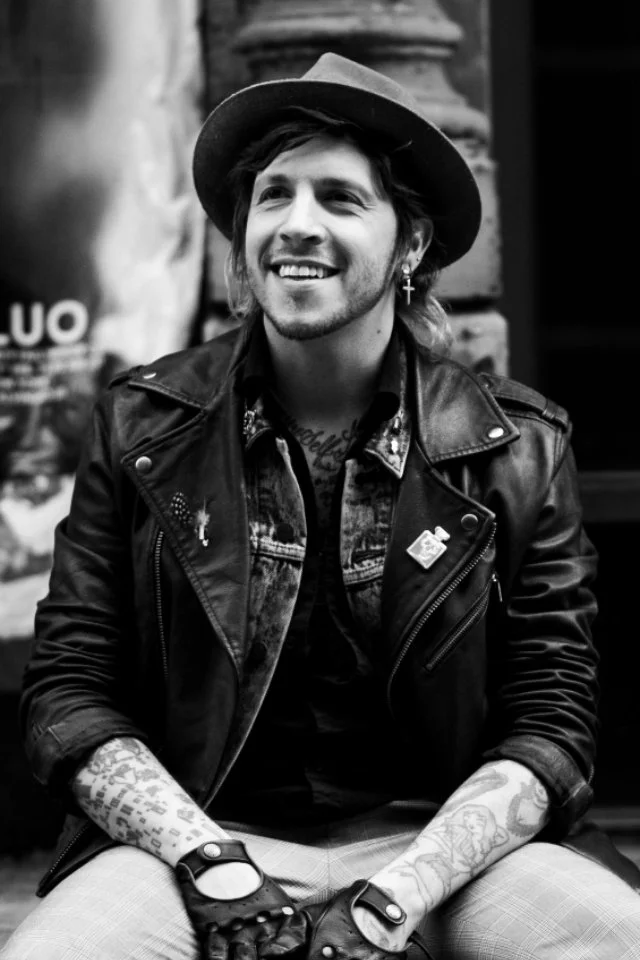
What was it like walking back into RISD, this time not as a student but as the first person teaching tattooing at a university level?
Returning to RISD in this new role felt both humbling and deeply full-circle. Walking back through those halls - not as a student this time, but as the first person to teach tattooing at a university level - carried a real sense of responsibility. It wasn’t just about teaching a skill; it was about legitimizing tattooing as a serious, historically rich, and important art form.
For me, bringing tattooing into an academic space isn’t about changing its essence or “institutionalizing” it. It’s about creating room for deeper study, informed practice, and broader cultural understanding - honoring both its roots and its ongoing evolution through conceptually driven artists.
RISD has always been about pushing boundaries in art and design, so it felt like the perfect place to start this conversation.
In fact, I first proposed the idea for a tattoo course back in 2018, but the seed had been planted long before that. Since graduating over twenty years ago, I had dreamed of returning to teach, and my path, through both painting and tattooing, has led naturally to this moment. Over the past decade, I’ve seen tattooing gain increasing recognition as a legitimate contemporary art practice and now feels like exactly the right time to help bridge that gap.
Tattooing has always existed between fine art and street culture, outside gallery walls and academic institutions. What does it mean to see it finally enter academia?
It’s incredibly exciting - and honestly, long overdue. For so long, tattooing has existed in a space that straddled fine art and subculture but rarely received the same institutional respect. After much research, I discovered that there has never been a university-level tattooing course structured like this one, which made it clear that change was needed.
Tattooing is experiencing a kind of renaissance right now. It remains one of the most personal, dynamic, and imaginative art forms today. Having worked as both a practicing fine artist and as a tattoo artist, I’ve seen firsthand how these worlds inform and enrich one another. This course is my way of helping students explore that intersection - where technique, concept, and cultural history meet.
At the same time, I recognize that tattooing carries different meanings depending on context. There’s the ancient, spiritual, and ceremonial tattooing practiced for millennia - seen in cultures from the Polynesian islands to ancient Egypt - and there’s modern Western tattooing, which grew from sailors’ traditions into today’s global art movement. Both deserve thoughtful study. Academia has long embraced painting, sculpture, fashion, glassblowing, and design- so it’s only natural that tattooing, too, takes its rightful place in that dialogue as both a creative practice and a viable career path for artists.
What does this moment represent for the future of tattooing as a recognized art form? Have you encountered any misconceptions or pushback about bringing it into the curriculum?
I think tattooing has been recognized as an art form in pop culture and within its own community for quite some time - it’s just taken longer for the fine art world to fully catch up. This course isn’t a cure-all for that gap, but it is a significant leap forward. RISD took a leap by offering it, and I’m hopeful other institutions, galleries, and museums will follow.
There are still misconceptions, of course - some people still view tattooing as “lowbrow” or separate from fine art. But those boundaries are dissolving. We already see tattoo-inspired work in galleries and publications like Juxtapoz, and I believe as more artists continue to bridge those worlds, the art world’s perspective will continue to expand. What matters most is that students, and future artists, learn to see tattooing for what it truly is: a complex, disciplined, and deeply human form of artistic expression.
As both a painter and tattoo artist, you’ve worked across disciplines traditionally taught at RISD—like painting, sculpture, and graphic design. Where do you see the strongest parallels between tattooing and those fields?
At their core, all of these disciplines share the same foundation: they’re manual modes of artmaking - acts of creating something that didn’t exist before. Tattooing, like painting or design, relies on the same elements and principles of visual composition - line, form, balance, rhythm, and contrast - to create something powerful and memorable.
In tattooing, just as in painting or sculpture, an artist must study history, understand tradition, and master technique before developing a unique voice. It takes years of dedication and discipline to achieve fluency in the medium. Tattooing also shares the collaborative spirit of illustration - you’re constantly problem-solving with a client, interpreting their ideas through your own artistic lens, and creating a piece that ultimately requires their full trust and approval.
It’s that blend of technical rigor, conceptual thinking, and human connection that makes tattooing such a natural extension of the visual arts.

Conversely, what distinguishes tattooing from painting or illustration? Is it simply a matter of medium, or something deeper?
For me, the difference runs much deeper than the medium - it’s about the relationship between the artist and the recipient. In tattooing, the artwork lives on a person; it becomes a part of their identity and life story. That creates a profound level of intimacy and responsibility that doesn’t exist in quite the same way in other art forms.
A painting or illustration might hang in a gallery or a collector’s home, possibly changing hands over time. But a tattoo is permanent, deeply personal, and non-transferable - it’s a collaboration built on trust. There’s something spiritual about that exchange; the artist is literally marking someone’s body, and the client is carrying that art for life.
While there are strong parallels between tattooing and illustration in terms of process and design, tattooing introduces an entirely different dimension: the human body as both canvas and collaborator.
For students who have never held a tattoo machine before, what core principles or philosophies of tattooing do you most hope to pass on?
Above all else - respect the medium. Respect its history, its traditions, and the people who have carried it forward. Tattooing is a demanding and deeply personal art form, and it requires humility, patience, and care.
I always tell my students: never approach a tattoo casually. Each line you make is permanent, and every client is trusting you to alter their body and appearance forever. That trust must be earned and honored.
My teaching emphasizes fundamentals - understanding the roots of tattooing across cultures, mastering technique, and working responsibly. But it’s also about integrity. Take pride in your craft, in your time, and in your clients. Never rush, never cut corners, and always approach the work with intention and respect.
“While there are strong parallels between tattooing and illustration in terms of process and design, tattooing introduces an entirely different dimension: the human body as both canvas and collaborator.”
Tattooing has historically been taught through apprenticeships. How does teaching it in a classroom setting change that dynamic?
Apprenticeships have always been essential to tattooing - they’re how the culture and craft have been passed down for generations. What we’re doing in the classroom isn’t replacing that model; it’s providing an informed, responsible foundation for students who may one day pursue it.
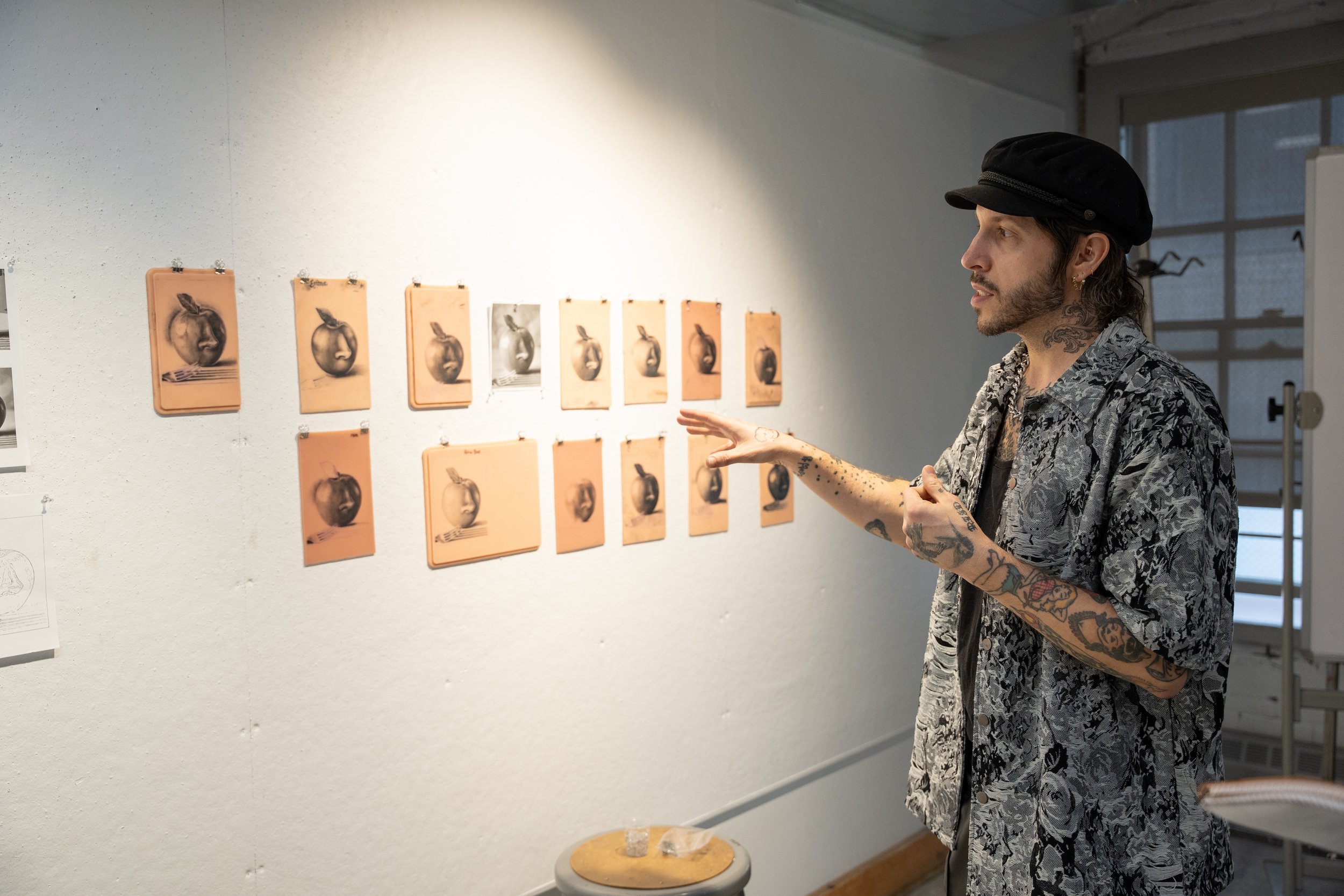
Anyone can buy a machine online and start experimenting, but that doesn’t mean they’re learning safely or respectfully. This course creates a structured environment where students can study tattooing’s history, materials, and techniques before ever touching skin. They practice on silicone surfaces and learn everything from machine setup to sanitation standards.
By the time they leave, they’re not tattoo artists yet - but they have an important foundation so they can approach an apprenticeship with a deep sense of respect for the medium and its traditions.
What were the non-negotiables for you when designing this curriculum — the things every student must learn?
Safety and respect were at the top of the list. From day one, every student signs a contract agreeing not to tattoo human skin - neither themselves nor others. This course is a structured and safe introduction to the art form, and all hands-on work happens on silicone sheets or other synthetic materials, never real skin. It’s essential that students understand that tattooing carries serious ethical and health responsibilities before they even touch a machine.
Before anyone picks up a machine, the class begins with history. We start by studying tattooing’s rich cultural and social dimensions, its tools, pigments, and global traditions, alongside modern practices of hygiene and safety. From there, the semester blends theory and practice. Students research tattooing’s global history, explore its role in contemporary art, and design their own work that reflects both traditional influences and personal voice.
On the technical side, they learn everything from machine setup and maintenance to understanding the anatomy of skin, tonal theory, and shading techniques - all practiced on synthetic surfaces. The course also emphasizes the conceptual: how the body functions as a living canvas and how tattoos communicate identity and meaning. My goal was to create a curriculum that respects tattooing’s past while preparing students for its professional future.
Do you think formal education risks diluting tattoo culture, or does it have the power to strengthen and preserve it?
I see it as a powerful step toward preservation and growth. For so long, tattooing has thrived outside institutions, passed down through apprenticeships and personal mentorships. Bringing it into academia doesn’t erase that lineage - it supports and documents it.
Formal education provides a space for critical study: the anthropology, history, aesthetics, and ethics that shape the practice. It also ensures that students learn about safety, technique, and design with the same rigor applied to any other art discipline. Rather than diluting tattoo culture, education can deepen appreciation for its culture, safeguard traditional methods, and foster innovation.
Ultimately, this course isn’t about taming tattooing - it’s about honoring its complexity. By studying it seriously, we acknowledge it as both a living heritage and a legitimate form of contemporary artistic expression.
If tattooing is now being taught at RISD, where do you see the next frontier for the art form—museums, galleries, or something else?
That’s an exciting question. I’ve seen exhibitions featuring photographs of tattooed people, which are powerful but often end up focusing more on photography than the tattoo itself. The challenge is that tattoos are inherently embodied - they live on skin, on people - so translating them into gallery or museum spaces takes creative thinking.
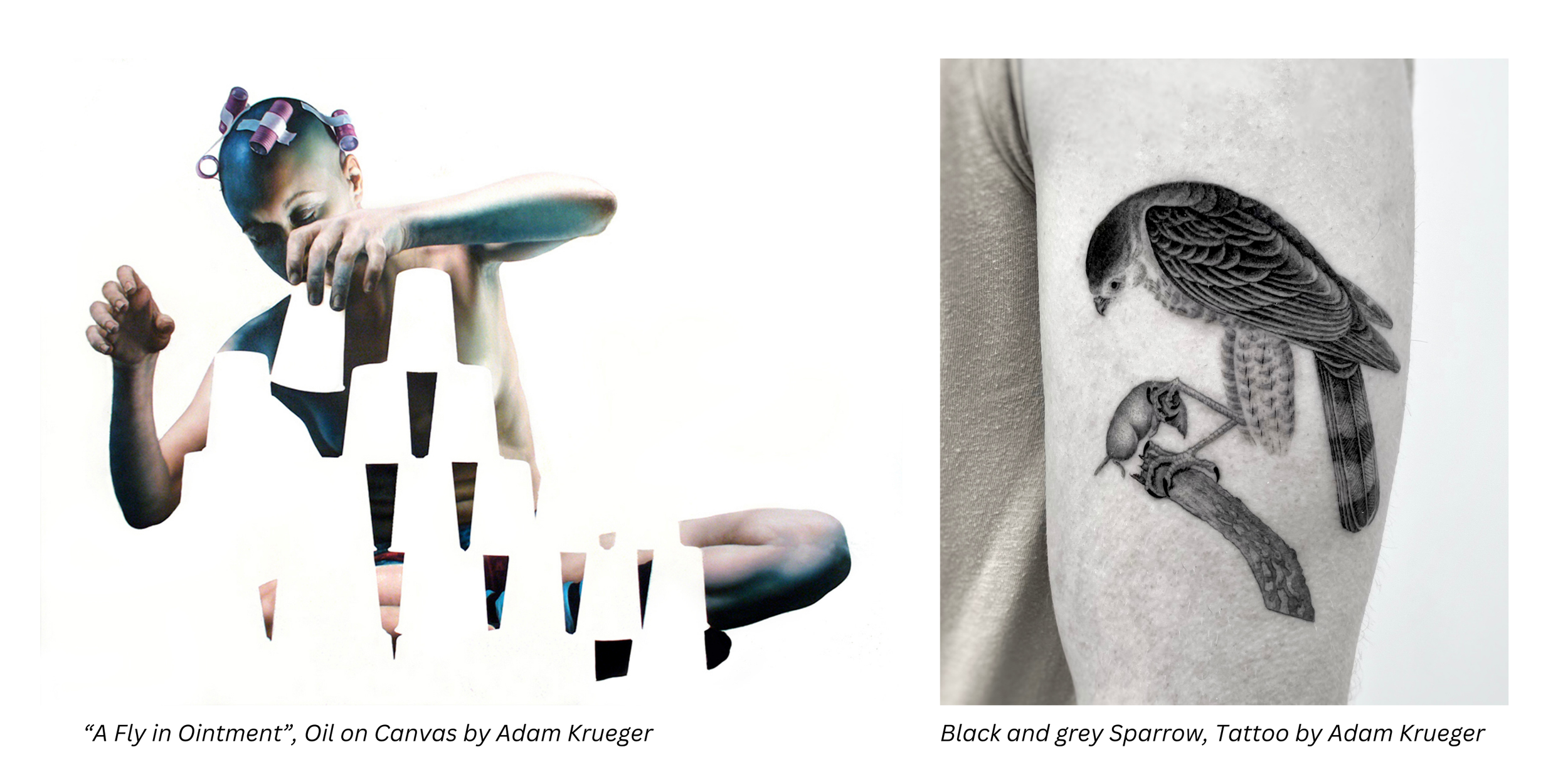
In my own practice over the past decade, I’ve explored tattooing across different surfaces: sculptures, paintings, and even wearable art. I think the next frontier lies in that kind of experimentation - finding ways for tattoo artists to present their work off-skin, while still honoring the spirit and craftsmanship of the medium. If artists keep expanding how tattooing is expressed and displayed, I believe we’ll start to see it occupy more space in museums and galleries.

Tattd’s Take?
Tattooing at RISD isn’t just a class, it’s a signal. A signal that the art form is stepping into new arenas, expanding its reach, and reshaping how the world understands it. With Adam at the helm, tattooing is no longer confined to studios or subcultures; it’s entering a dialogue with design, academia, and the future of art itself.
For decades, tattooers have carried the weight of proving their craft’s legitimacy. This moment flips that script. The conversation is no longer about whether tattooing is art — it’s about what kind of art it will become, and how it will influence the next generation of creators.
By bringing tattooing into one of the world’s most respected design institutions, Adam is opening the door for students, scholars, and artists to see the medium not as outsider, but as essential. And that changes not only the perception of tattooing, it challenges and reshapes the boundaries of what art can be.
